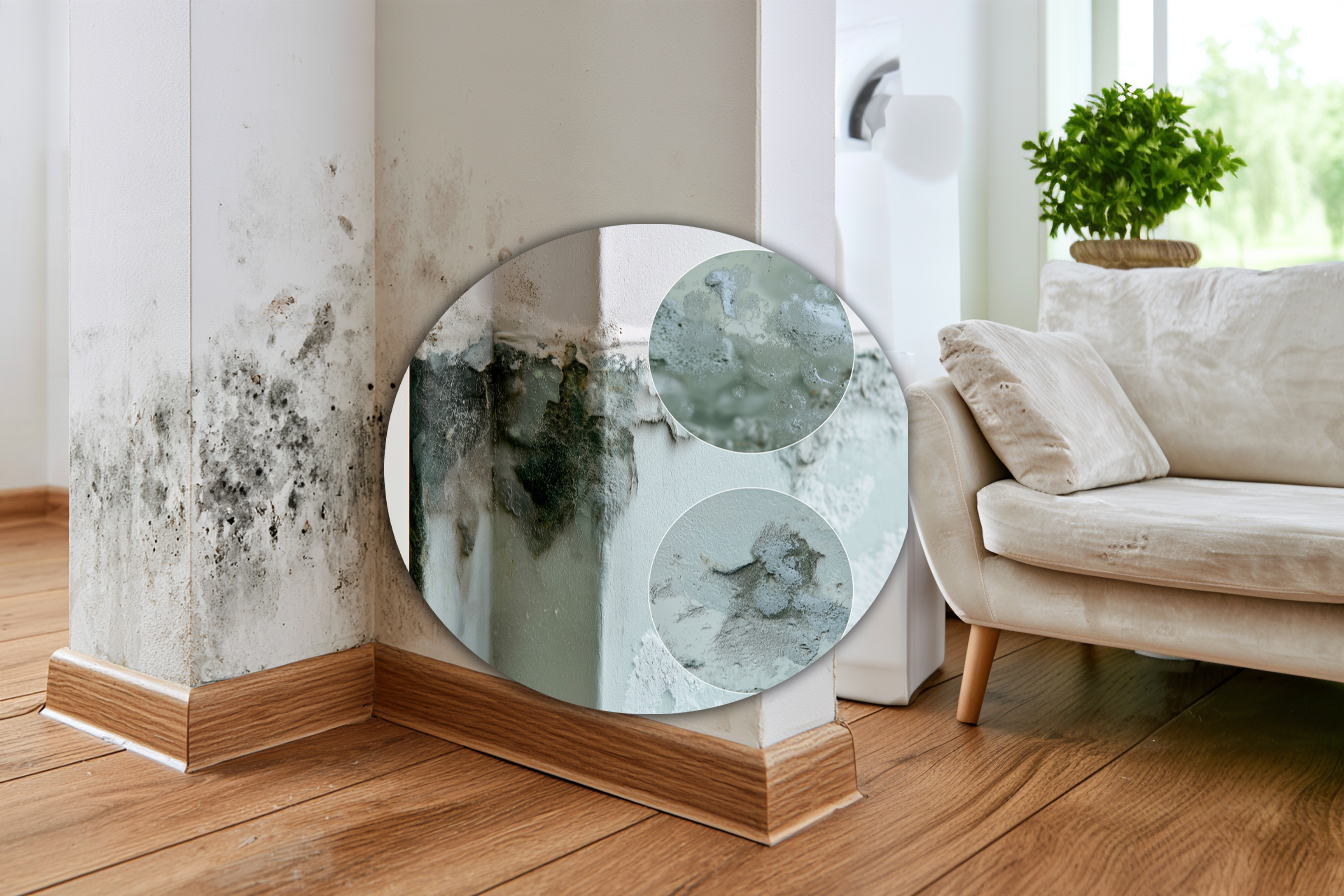


You cleaned the mold from your wall, and everything looked fine. A few weeks later, the dark spots returned. You cleaned the area again, but the problem kept coming back.
Recurring mold is a frustrating issue for homeowners and property managers, especially when repeated cleaning, painting, or surface repairs fail to provide a lasting solution.
In many cases, mold returns because the underlying moisture problem remains unresolved. Hidden plumbing leaks, condensation, high indoor humidity, poor ventilation, or water entering through the building envelope can create damp conditions that allow mold to grow again.
At All Season Inspection, we help property owners in Vaughan, Toronto, North York, and surrounding areas investigate moisture-related concerns through professional mold inspections, moisture assessments, and thermal imaging when appropriate.
Understanding why mold keeps returning is the first step toward addressing the source of the problem rather than repeatedly treating the visible stains.
- Why Recurring Mold Is Often a Moisture Problem
According to Health Canada, controlling indoor moisture is essential to preventing mold growth. Identifying and correcting leaks, condensation, and ventilation problems can help prevent mold from returning after cleaning.
Mold can develop where water leaks, flooding, high humidity, condensation, or inadequate ventilation create damp conditions.
This means recurring mold is often a moisture problem first.
Cleaning may remove visible growth from a surface, but if the source of moisture remains, the same conditions can return.
Health Canada specifically notes that unless the cause of a moisture problem is identified and corrected, mold can reappear.
Common Causes of Hidden Moisture in Homes
Water may even travel from one location before becoming visible somewhere else.
The source is not always obvious.
A plumbing leak can wet materials behind a wall.
Rain can enter around roofing, windows, exterior cladding, or foundation areas.
A bathroom exhaust fan may not be venting properly to the outdoors.
A basement may experience high humidity.
A cold exterior wall may create condensation.
Poor airflow can allow damp conditions to persist.
Water may even travel from one location before becoming visible somewhere else.
This is why simply treating the surface does not always solve the problem.
How Condensation Contributes to Mold Growth
Condensation occurs when warm, moisture-containing air meets a sufficiently cold surface.
You may notice it on windows during winter, but condensation can also affect other cold building surfaces.
Poor insulation, thermal bridging, high indoor humidity, inadequate ventilation, and air leakage can all influence condensation conditions.
Health Canada recommends maintaining indoor relative humidity generally between 30 and 50 percent and addressing ventilation and moisture sources.
The correct target can depend on season and building conditions, but the principle is simple:
Controlling moisture is essential to controlling mould.
How a Professional Mold Inspection Identifies Moisture Problems
A professional mold and moisture investigation begins with the building, not simply the stain.
Inspectors may evaluate accessible areas for signs of water intrusion, condensation, leakage, staining, damaged materials, ventilation problems, and other moisture-related conditions.
Moisture meters can help identify damp areas.
Thermal imaging can reveal surface-temperature patterns that may deserve additional investigation.
Visual inspection can identify building conditions that contribute to moisture.
Sampling may be appropriate in some situations, but testing does not replace investigating the moisture source.
This distinction is important.
The goal is not simply to identify mold.
The goal is to understand why the conditions supporting mould are present.
What Thermal Imaging Can and Cannot Detect
This is another common misunderstanding.
A thermal camera measures surface-temperature differences.
It does not provide X-ray vision and does not directly prove that mold exists behind a wall.
However, unusual thermal patterns may help inspectors identify areas where moisture, missing insulation, air leakage, or other building conditions deserve closer evaluation.
Thermal imaging becomes more useful when combined with visual inspection, moisture measurements, and building-science knowledge.
When Should You Worry About Recurring Mold?
If mold continues returning after cleaning, if a musty odour persists, if water staining keeps appearing, or if an area repeatedly becomes damp, it is worth investigating the source.
The problem may be simple.
It may also be connected to plumbing, roofing, ventilation, humidity, drainage, or the building envelope.
The longer building materials remain damp, the greater the opportunity for deterioration and mold growth.
Find the Moisture Source Before Repainting or Repairing
Repeated cleaning, repainting, replacing drywall, or adding finishes without addressing moisture can become expensive.
If mold keeps coming back despite repeated cleaning, a professional inspection can help identify moisture conditions that need attention before further repairs are made.
At All Season Inspection, our mould inspection, moisture investigation, thermal imaging, and indoor-air-quality services help property owners better understand the conditions that may be contributing to recurring problems.
We investigate accessible areas, use professional diagnostic equipment where appropriate, and explain what the findings may mean for the next step.
Sometimes another specialist or contractor may be required to correct the underlying issue.
But the starting point should be clear:
Do not simply cover the evidence.
Understand what is creating it.
Recurring mold is often a moisture problem first. Find the source before repairing the surface again.