What size heat pump do I need? The answer depends on how much heat your home loses in winter and how much cooling it needs in summer. Two homes with the same square footage can need different heat pump sizes because their insulation, windows and air leakage differ.
Two houses with exactly the same floor area can have very different heating requirements.
One may have modern windows, excellent insulation, low air leakage, and a well-performing building envelope.
The other may have older windows, weak insulation, substantial drafts, and significant heat loss.
Installing the same heat pump in both homes simply because they are the same size can produce very different results.
What Size Heat Pump Do I Need? Start with Heat Loss
A proper heat-pump selection should consider the actual heating and cooling load of the building.
NRCan specifically advises that heat-pump sizing should consider the local climate, the building’s heating and cooling loads, and the objectives of the installation.
That means looking beyond floor area.
Important building characteristics include insulation levels, windows, exterior doors, air leakage, orientation, exposed surfaces, building envelope, ventilation, and planned renovations.
These factors affect how quickly heat leaves the home during cold weather.
What Happens If a Heat Pump Is Too Big or Too Small?
A larger heat pump may seem like a safer choice, but extra capacity can cause the system to turn on and off more often in mild weather. But oversized equipment can create its own problems.
NRCan notes that an oversized heat pump may cycle on and off during milder conditions, potentially reducing efficiency and comfort while increasing equipment wear and standby electricity use.
The objective is not to install the biggest unit available.
If you’re wondering, “What size heat pump do I need if I keep my furnace as backup?” ask your HVAC contractor how often the furnace would need to run on colder days.
The objective is to select equipment that matches the building and the intended heating strategy.
How Insulation and Window Upgrades Change Heating Needs
Undersizing also has consequences.
Natural Resources Canada’s heat pump sizing and selection toolkit explains how to account for local climate and your home’s heating and cooling needs when selecting an air-source heat pump.
If the heat pump cannot meet enough of the building’s heating requirement during colder periods, supplemental heating may operate more frequently.
NRCan notes that an undersized system can still operate efficiently, but increased use of supplemental heat can reduce the energy savings a homeowner expected.
Again, correct sizing is about balance.
Renovations Can Change the Heating Load
If you’re planning to add insulation, ask your contractor, “What size heat pump do I need once the upgrades are complete?
This is one of the most overlooked parts of heat-pump planning.
If you plan to add insulation or seal air leaks, tell your HVAC contractor before choosing equipment. Those upgrades can lower your home’s heating needs.
If you’re planning to add insulation or seal drafts, ask your contractor, “What size heat pump do I need after those upgrades?” That gives them a chance to account for the work before recommending a unit.
That is why homeowners planning major envelope improvements should coordinate those decisions with HVAC sizing.
If insulation, windows, doors, or airtightness are going to improve significantly, those changes should be considered before selecting equipment whenever possible.
The best heat pump is not simply the right size for the home today.
It should also make sense for the home you are creating.
What an Energy Advisor and HVAC Contractor Each Check
An HVAC contractor understands equipment installation and system operation.
An Energy Advisor or building-performance professional helps provide information about the building itself.
The strongest planning process brings these two sides together.
A heat-loss assessment can help establish what the home requires.
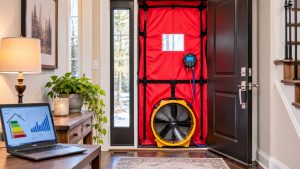
A blower door test can provide information about airtightness.
An energy evaluation can identify insulation and envelope characteristics.
The HVAC professional can then use accurate building information to support equipment selection and installation decisions.
Questions to Ask Before Choosing a Heat Pump
Heat pumps represent a major investment.
Choosing one based only on a quick square-foot calculation can leave important questions unanswered.
If you’re still asking, “What size heat pump do I need?” bring the following questions to your HVAC contractor. Your answers can help them account for your home’s heat loss, planned upgrades and need for backup heating.
Before you ask, ‘What size heat pump do I need?’, bring these questions to your HVAC contractor.
How much heat does the home actually lose?
How airtight is the building?
Will insulation be upgraded?
Are windows being replaced?
Are there comfort problems in specific rooms?
Will the heat pump serve as the primary heating system or operate with supplemental heat?
What temperatures must the system handle in the local climate?
These questions are more important than simply asking for a larger unit.
At All Season Inspection, we support homeowners with building-performance evaluation, heat-loss assessment, energy analysis, and heat-pump sizing consulting so they can approach HVAC decisions with better information.
Size the system for the building, not simply the square footage.
All Season Inspection
260 Edgeley Blvd, Unit 13B Vaughan, Ontario L4K 3Y4
Website: www.allseasoninspection.com
Email: [email protected]
Toll-Free: 1-888-950-4677
Central Office: 1-905-669-4440
Local Line: 1-416-996-2770